

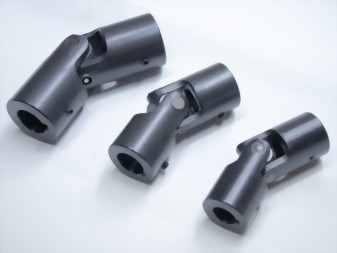
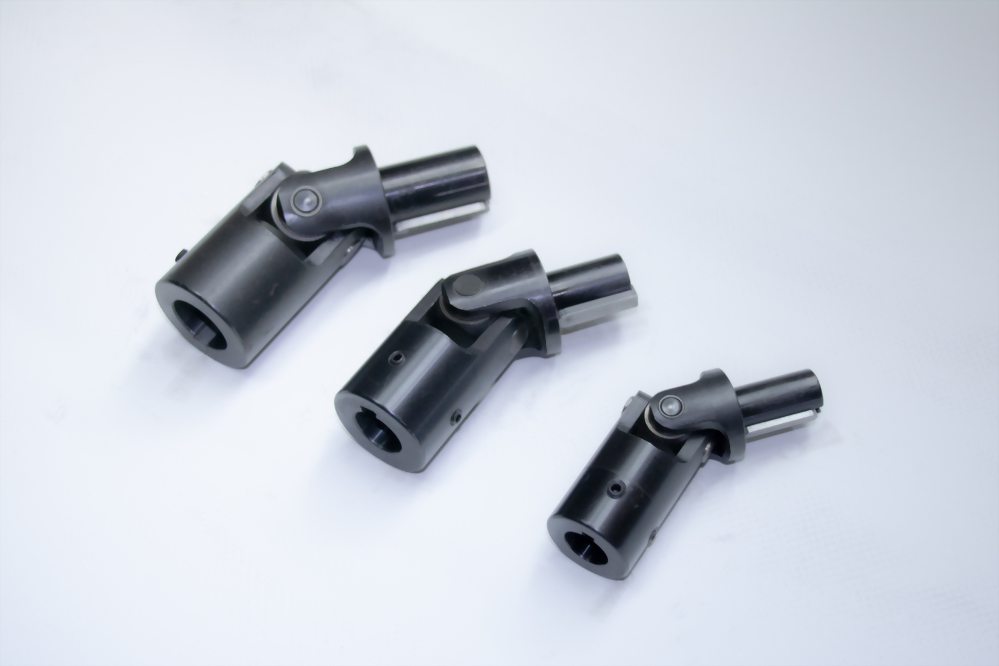
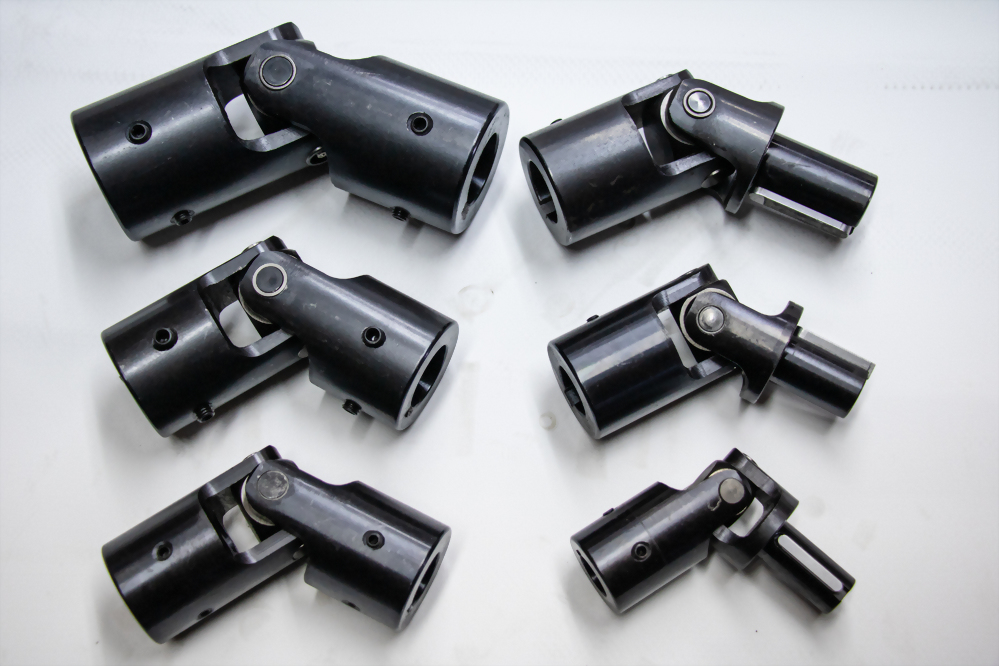

The principle of a universal joint is to provide variable angle power transmission, used in positions where the direction of the drive shaft needs to be changed or to compensate for tolerances between two shafts. In chip conveyor screws, its application can reduce issues like runout.
Common problems encountered with chip conveyor screws include bouncing, runout, and excessive vibration, often due to:
- The impact of coaxiality errors in their axes on power transmission, caused by assembly errors, etc.
- Unevenness of the inner surface of the sheet metal or cast iron base channel.
- Inclined channel surface design due to drainage requirements.
- Longitudinal machine tool models where the chip conveyor screw length exceeds 4.5 meters.
- Reducing the shear stress on the output shaft of the geared motor to extend the lifespan of the motor gears and shaft.
Using a universal joint in conjunction can reduce the above problems.
Screw conveyors often experience issues such as bouncing, wobbling, and excessive vibration.